Interesting Oddities and Fascinations Gathered Along the Road to Find Out
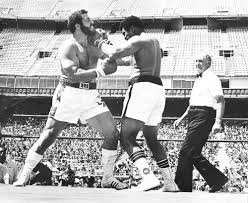
Who poured the “Orange Crush” into the punch? Denver Bronco defensive end Lyle Alzado wanted to display his prowess on a stage other than the football field. How about taking on Muhammad Ali in the boxing ring? Ali, at age 37 and weighing a hefty 236 pounds, agreed to an unscored 8-round exhibition bout with the 30-year-old Alzado for a guaranteed flat fee of $250,000 ($1.1 million in 2026 dollars). The fight took place at the Mile High Stadium in Denver on July 14, 1979. Ringside seats went for $100 ($450 in 2026 dollars) and an expected attendance of 75,000. Only 15,000 people showed up. But who did show up? Sharing the bill was Victor the Wrestling Bear—a 650-pound Alaskan brown bear—who would wrestle several brave volunteers. The other opening act was musical duo England Dan and John Ford Coley. The event was taped and broadcast on a later episode of NBC’s Sunday SportsWorld. Alzado had mortgaged his house to help fund the spectacle. He lost on all fronts. He wound up suing his business partners and creditors. A Colorado court eventually ruled that he was personally liable for all remaining debts. It is reported that both bear and band took their performance fees.
Speaking of England Dan and John Ford Coley… they enjoyed a good run of hit songs in the 70s. In 1976 their “I’d Really Love to See You Tonight” reached #2 on the Billboard Hot 100. They followed up that same year with the single “Nights Are Forever Without You.” In 1977 they released the LP Dowdy Ferry Road. In 1978 they had another hit: “We’ll Never Have to Say Goodbye Again.” It reached #9 on the pop charts and #1 on the Adult Contemporary Chart. Their last top ten hit single came in 1979, a ballad written by Todd Rundgren, “Love is the Answer.” Of course, they featured that song in their pre-fight performance. They also sang the National Anthem as the fighters entered the ring. That must have been one swell night of entertainment.
Jed Allen hosted a weekly televised celebrity bowling competition from 1971 to 1978. On September 8, 1973, the cast of The Brady Bunch took on The Waltons. I won’t reduce myself to gutter language.
NBC aired a television mini-series on the Holocaust for four successive nights, April 16-19, 1978. Actress Meryl Streep won an Emmy for her performance. The series proved particularly consequential in West Germany. Holocaust survivor Elie Wiesel HATED the show, calling it “untrue, offensive, and cheap” in a blistering New York Times review.
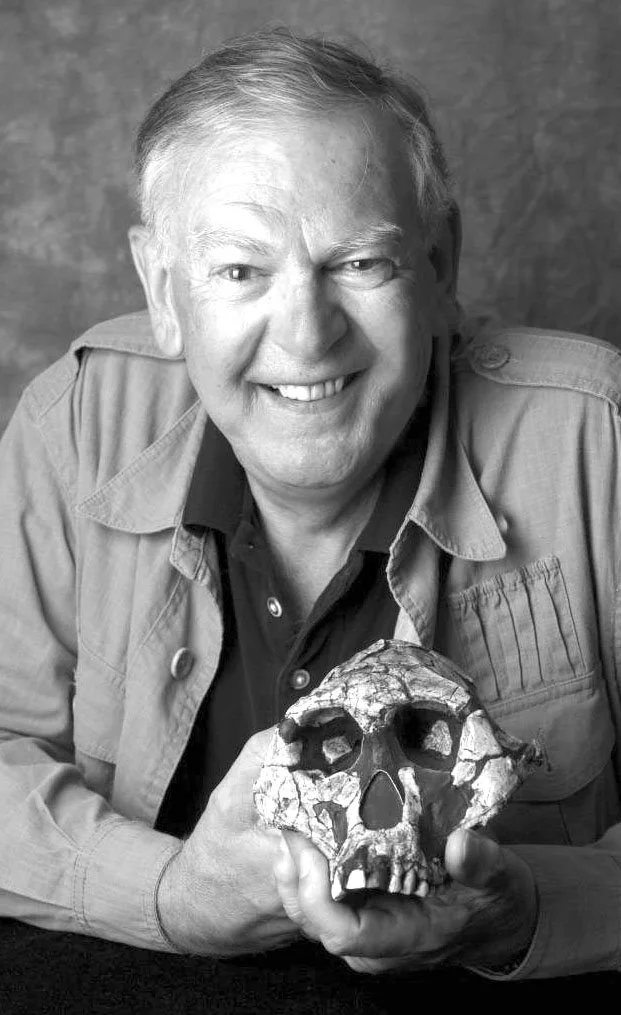
On November 24, 1974, American paleoanthropologist Donald Johanson and graduate student Tom Gray stumbled upon something fascinating that would radically affect our understanding of human evolution. Digging around in Hadar, Ethiopia, they discovered a large fossil—3 feet and 7 inches, weighing about 60 lbs.—which turned out to be the skeletal remains of an Australopithecus afarensis, an extinct species of early hominins. They named this 3.2-million-year-old beauty of bones “Lucy” after the Beatles’ song “Lucy in the Sky with Diamonds,” which the tape-deck played repeatedly back at camp during the celebratory party.
The 1970s saw the launching of Jane Goodall’s study of the Gombe National Park chimpanzees in Tanzania. The warring propensities and brutal violence between two rival chimp communities was a revelation and an immense shock to the researchers. In January of 1974 they began to document what has since been called the Gombe War (1974-77). Goodall and her team witnessed vicious beatings that sometimes ended in death. Chimps were observed drinking the blood of their victims. Perhaps the most chilling spectacle of savagery they witnessed involved the ambush and assault of Goliath, an older, aged former alpha male in February 1975. His prolonged and systematic torture (about twenty minutes long) killed him.
With the executive branch of the federal government down for the count in the post-Watergate period, heavily-stacked Democratic majorities in the Senate and the House throughout the decade continued to hammer away—a battle royale between Article I and Article II. Legislators sought to tie down executive authority with statutory rope. A flurry of legislative measures designed to check presidential power were enacted: War Powers Act (1973), Congressional Budget and Impoundment Control Act (1974), Presidential Records Act (1978), Foreign Intelligence Surveillance Act (FISA) in 1978, Inspector General Act (1978), Ethics in Government Act (1978 – established the Office of Independent Counsel), and the Civil Service Reform Act (1978). The last was the most significant overhaul of the federal bureaucracy since the Pendleton Act of 1883. Although driven by Congress, it was part of President Carter’s ‘Good Government’ agenda. It increased accountability and emphasized a merit-based performance policy over seniority.
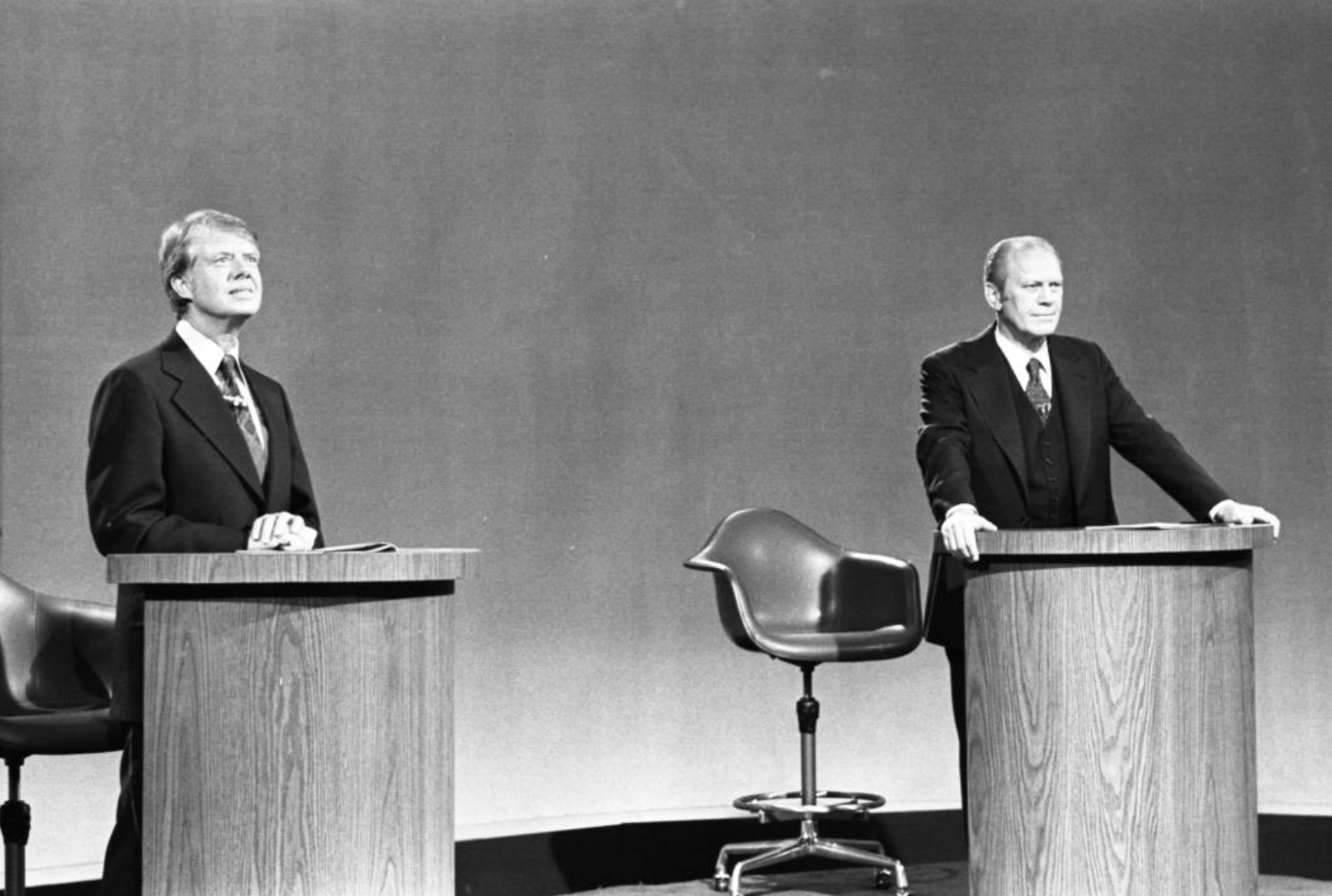
Speaking of Carter. Did you know that the first Ford/Carter presidential debate, held at the Walnut Street Theatre in Philadelphia on September 23, 1976, experienced an unplanned and exceedingly awkward occurrence? With only nine minutes remaining in their 90-minute television event, all of the sudden things went absolutely silent. The two candidates stood mute and stiff as statues—for twenty-seven excruciating minutes! A technical glitch caused the embarrassing interruption; a 25 cent capacitator in the audio system had malfunctioned.